No Man's Sky Starships, Interceptors, and Corvettes
Every hull type, how to scrap a crashed wreck, and the Corvette Workshop steps — including the Cosmos tractor beam.
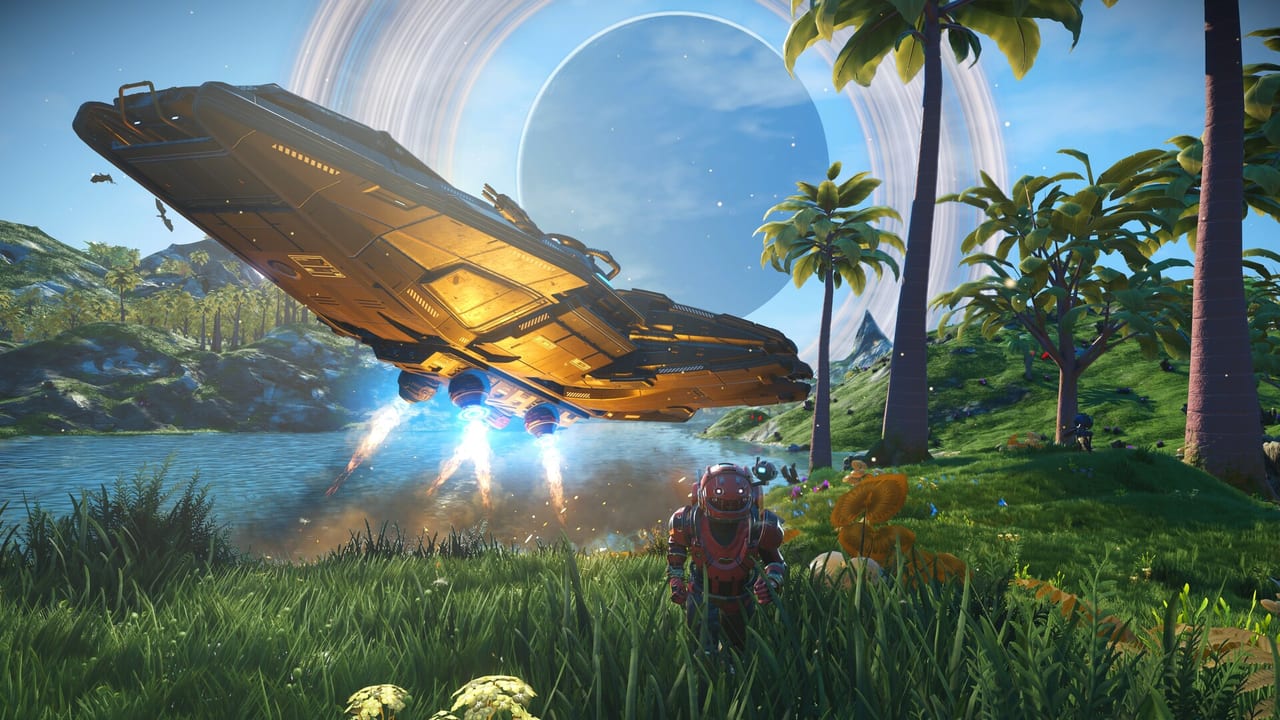
Your first ship is a C-class taxi with a broken Pulse Engine. Everything after that is a role: scout, gun, truck, trophy, living creature, sentinel prize, or a walkable Corvette you built from salvage. This page is how those roles fit together after Voyagers 6.0 (August 2025) and Cosmos 7.0 (9 September 2026). For which hulls are actually worth a slot, jump to the ship tier list. For how to pay for them, use Units and Nanites.
No Man’s Sky does not make you pick a faction ship. Gek traders, Korvax scientists, and Vy’keen warriors all land at the same pads. You steal, buy, or assemble whatever flies.
The nine hull families
Explorers warp farther. They are the Hyperdrive specialists and the right first upgrade if you hate yellow-star babysitting. Fighters shoot. Their bonus is damage, which matters in pirate systems and in Sentinel space. Haulers carry. If you scrap ships or haul Storm Crystals, the extra cargo is the build. Shuttles are balanced mediocrity — cheap, common, fine as a spare.
Exotics (the squid and ball ships) are rare trophy hulls with strong all-round bonuses and tiny spawn rates. Solar ships, the sail-and-keel pirates, recharge Pulse fuel while they fly and feel like the spiritual successor to cheap exploration. Living Ships are organic, quest-gated, and fuelled differently; they are a project, not a station impulse buy. Interceptor ships are crashed sentinel craft on dissonant worlds — often the best combat hull a mid-game save will see, and they look like the vintage Interceptor Expedition 23 is handing out as a nostalgia prize.
Corvettes are the Voyagers feature. They are modular, walkable, crewable, and assembled at a workshop instead of bought as a sealed cockpit. They are not strictly better than an Interceptor in a dogfight. They are better as a home: interior refiners, windows, friends standing on the ramp, and, after Cosmos, a tractor beam that eats hulk salvage.
Keep one ship that warps well and one that you enjoy looking at. Six extra C-class Fighters in the collection are Nanites you refused to collect.
Claiming crashed ships and scrapping them
Crashed ships ping on the visor, on distress charts, and as white icons from the air. Land, board, claim. If the class and slot count are obviously better than your current hull, repair the Pulse Engine and Launch Thruster and make it your daily driver. If they are not — and they usually are not — fly the wreck to a station and scrap it. Scrapping pays Units based on class and slots, and you can recycle installed technology into Nanites at the same terminal.
This is the loop that funds everything else. Do not sit on a toxic planet for two hours repairing twenty broken slots on a C-class Fighter. The Getting Started warning exists because that trap eats new saves. Scrap, scan, buy scanner modules, then hunt an A- or S-class with a role.
Station and trading-post pads still spawn ships. Reload tricks exist; so does patience. An S-class Exotic is a luxury, not a requirement. A well-modded Solar or a scrapped Interceptor will carry a Normal save through Cosmos without a reload ritual.
Corvette Workshop: the actual steps
Any space station. Look left of the landing pads for the blue teleporters. Take the one that leads to the Corvette Workshop (the ship-icon beam if you already have a Corvette parked). At the terminal you can purchase basic modules, trade advanced modules, or begin construction.
A valid Corvette needs, at minimum: landing gear, a habitation module, an access / landing bay, a cockpit, a reactor, a main engine, and a weapon. Two landing-gear pieces and extra thrusters make a more stable pad, but the game will not finalise the build until the required set is present. The workshop sells basic Thunderbird-style parts for Units — several million if you buy every piece new. Salvageable Scrap on planets (yellow buried-tech icons) and derelicts feed the cache for free. Put parts in the Workshop Cache so your Exosuit stays usable.
Build order that fails less: landing gear on the pad, hab on the gear, cockpit on the front, access bay on the back or belly, reactor and main engine wherever the silhouette can hide them, weapon last. Use the build camera from the controls guide so pieces snap in the bay instead of floating a metre off the pad. Apply the build to register it as a ship. You can store and resume. Other players only see applied changes. Decorate the interior after it flies; a refiner and a bed turn the Corvette into a mobile base.
Crew missions and friends walking your halls are the multiplayer hook. You do not need a squad to build one. You do need Units or salvage, and you should not pause a new save for a 100-piece sculpture before you have a Hyperdrive.
Cosmos tractor beam and space as a salvage yard
Cosmos 7.0 hangs a tractor beam on Corvettes (and ties into the same salvage fantasy as the Gravitino Coil gravity gun from Remnant, February 2026). Space hulks can be stripped. Pull chunks with the Coil, throw them to the tractor beam, and do not greed until the hulk melts down. Scan for high-value nodes first. Outposts buy maps and salvage. Bio-wrecks fight back. Asteroid belts are resource lanes, not empty Pulse scenery.
That loop is why a Corvette is the Cosmos ship even if an Interceptor still wins a duel. You cannot walk an Interceptor’s hold with a crate of hulk metal. You cannot park friends on its spine during an alliance war. Build the workshop hull ugly and functional, then make it pretty. The Morphologis-style starter Corvette videos exist because a small, cheap, complete ship beats a 160-piece masterpiece that never leaves the pad.
Living Ships, Solars, and Exotics still have jobs. The tier list is opinionated on purpose. This page’s job is the decision tree: scrap wrecks, fund scanners, pick a daily driver, assemble a Corvette when you can afford the seven mandatory parts, then bolt on the tractor beam and go pick a hulk. Expeditions will hand you a Golden Rasamama S36 and a vintage Interceptor if you run Our Journey Continues — those are collection prizes, not a reason to skip the workshop.
When the pad is full, scrap the hull you never fly. Nanites from recycled modules buy the next S-class Pulse upgrade. The Guides Hub will still point you at bases, expeditions, and controls when you are done staring at landing gear. A Traveller with one good Interceptor and one ugly Corvette is richer than a Traveller with twelve C-class Fighters and a dream.
Frequently Asked Questions
Quick answers Travellers search for after Cosmos.
Where is the Corvette Workshop?
In space stations, through the blue teleporters on the left of the landing bay. Use the ship-icon beam if you already have a Corvette parked. Voyagers 6.0 added the feature in August 2025; see Voyagers notes.
What parts are required to finish a Corvette?
Landing gear, a habitation module, an access or landing bay, a cockpit, a reactor, a main engine, and a weapon. Extra gear and thrusters help stability but are not the minimum checklist.
Should I repair crashed ships or scrap them?
Scrap most of them for Units and Nanites. Keep a wreck only if class and slots beat your current hull. The beginner guide calls out the C-class repair trap on purpose.
What did Cosmos add for Corvettes?
A tractor beam for salvage, plus a space layer of hulks, outposts, bio-wrecks, and asteroid belts. Details: Cosmos 7.0. The Gravitino Coil (Remnant) is the Multi-Tool half of that fantasy.
Which ship type should I chase first?
A Solar or a scrapped Interceptor funds and fights; a Corvette becomes the home. Rankings live on the ship tier list. Do not class-upgrade the starter Rasamama.
Can friends fly with me?
Yes. Corvettes support crew missions and walking interiors. Online co-op, not split-screen. See multiplayer for Cross-Play, Nexus jobs, and Cosmos alliances.